Why Informed Buyers Shape This Market
Bangalore's used car market has a specific characteristic that sets it apart from many other cities: the buyers are highly informed. This is a city full of people who spend their working days analysing data, running models, and making decisions based on evidence, and many of them bring exactly that approach to buying a used car. The good news is that this creates a relatively honest market; the bad news is that if you're buying and don't understand the pricing drivers, you're negotiating against people who very much do.
So let's break down what actually determines second-hand car prices in Bangalore, and what being informed on your end actually looks like.
Mileage in context, not in isolation
A 2019 Hyundai i20 with 75,000 km in Bangalore is not the same as a 2019 i20 with 75,000 km in a smaller city. Bangalore's driving conditions, long commutes, frequent start-stop, significant time spent on elevated roads with variable quality, generate a specific type of mileage stress. Buyers here understand this and price accordingly. Higher mileage from documented Bangalore use is less alarming to the market than the same number from an unknown source.
Variant and fuel type premiums
Petrol cars carry a premium in Bangalore over diesel at the same mileage and year, more so than in cities with better CNG infrastructure. Post-BS6, diesel running costs in the sub-₹15 lakh segment have gone up, and buyers are aware. Automatic transmission variants, particularly DCTs and CVTs, carry a specific premium for city use because they address the clutch fatigue issue.
Service record quality
Documented Maruti/Hyundai/Honda service centre records carry meaningful price premiums over equivalent cars with independent workshop service. Bangalore's buyers will cross-check service records against the model's recommended service schedule and call out gaps. A car with complete, consistent authorised service history in a desirable variant can command 10-15% more than a comparable car with patchy records.
Registration year vs model year
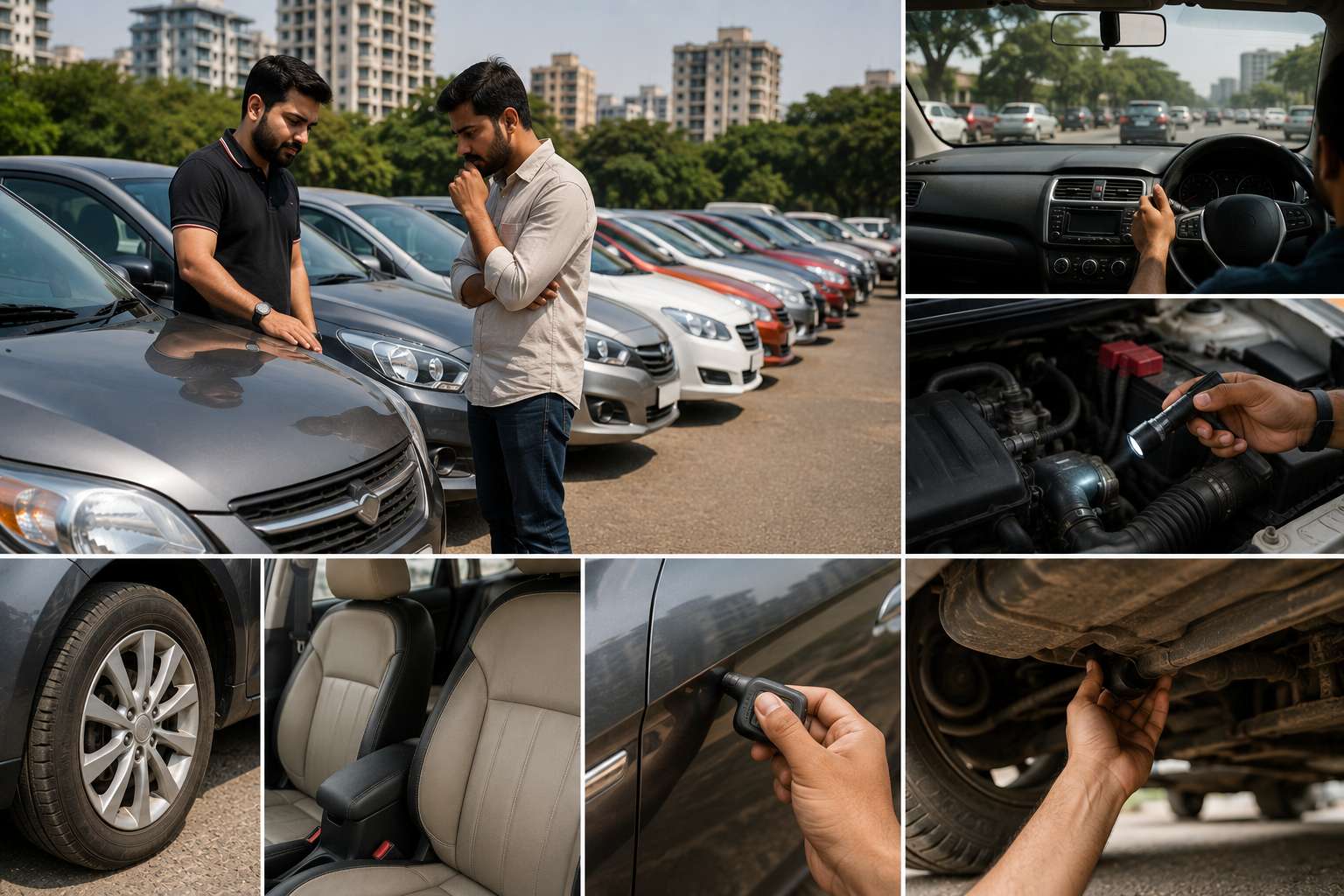
These are different things and buyers in Bangalore know it. A car registered in March 2019 can be a 2019-build or a 2018-build, depending on when the dealer received stock. The manufacturing date (visible on the compliance plate inside the driver's door jamb) tells you the actual production date. A 2018-manufactured car registered in 2019 is effectively a 2018 car, which matters for depreciation and age.
Getting a realistic view of second hand car price in Bangalore before entering any negotiation is simply level-setting, and the certified pool of used cars gives you the comparables that reflect what the market is actually paying.
For buyers looking at second hand car price in Bangalore, comparative pricing across certified listings is the fastest way to calibrate what a fair price looks like for a specific variant, year, and mileage combination. If a car is priced significantly below the band for similar listings, find out why before assuming it's a good deal.
The broader market of used cars across India is a useful reference frame, prices in Bangalore sometimes run slightly higher than in smaller cities for desirable models because demand is strong, but local comparables are always the best anchor for negotiation.
Know your data, and Bangalore's used car market rewards that preparation with transparent pricing.
Transmission type carries a specific premium in Bangalore's market that's worth understanding. Automatic transmission cars, whether AMT, CVT, or DCT, consistently command a 10-15% premium over identical manual variants in the Bangalore used car market. This premium is driven by the city's traffic conditions: buyers who commute from Sarjapur to Whitefield, from JP Nagar to Hebbal, or anywhere near Silk Board are spending significant time in near-stationary or slow-moving traffic where an automatic transmission is a genuine daily quality-of-life improvement. Sellers of automatic transmission cars should hold their price expectation at the upper end of the band; sellers of manuals should expect to be at the lower end relative to similar listings.
The documentation trail expected by Bangalore buyers is also specific. Authorised service centre stamps in the service booklet are standard expectation. Independent workshop service is viewed more sceptically here than in cities where authorised network density is thinner. If your car has been serviced at a quality independent garage with proper bills, having those bills organised and presentable helps, but it's still at a disadvantage compared to the same car with continuous authorised service stamps.
Used car pricing in Bangalore also responds to season in a way that's worth timing if you have flexibility. The city has two peak buying periods: January-March (post-bonus) and October-December (festive). During these windows, buyer motivation is higher and price sensitivity is lower, which translates into sellers being able to hold closer to their asking price and complete transactions faster. The May-August window is quieter, and that reduced activity gives buyers more leverage.