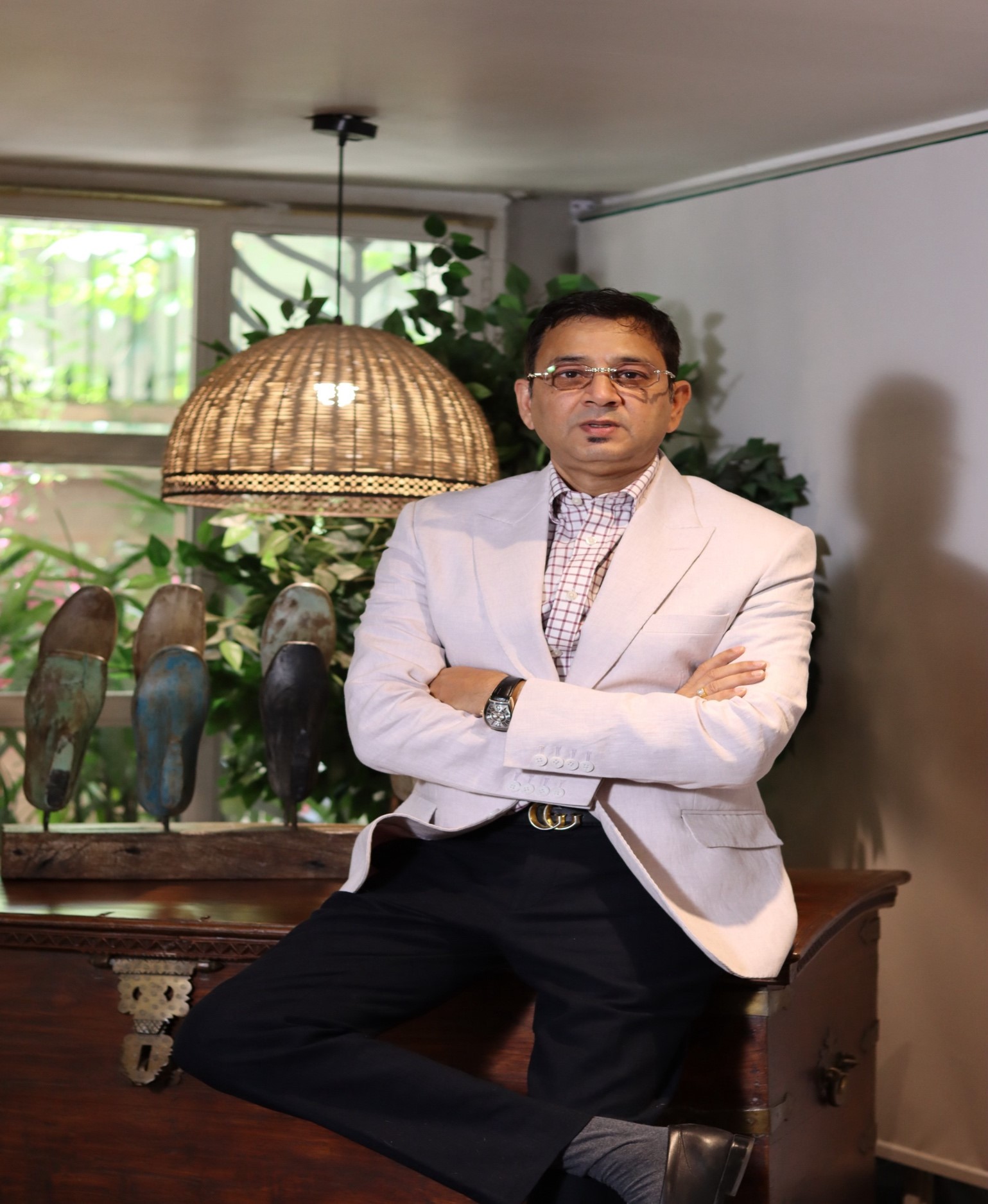
In this exclusive interview, Sandiip Kapur talks about his upcoming comedy Uttar Da Puttar, set to release on July 24, 2026. Inspired by Vastu Shastra and real-life experiences, he also shares his insights on filmmaking, independent cinema, and the evolving entertainment industry.
Q: Your upcoming film Uttar Da Puttar is a comedy based on Vastu Shastra, which is a very unique and interesting subject. What inspired you to choose this story?
This is a comedy film, but it's a situational comedy with a strong emotional connect. Around 70% of the story is inspired by my own real-life experiences.
When I was building my house in Delhi, I went through many situations related to Vastu. I personally believe in Vastu, but during the process, I also came across different opinions and conflicting advice. That made me realise how deeply people are influenced by such beliefs.
I noticed that almost every family has at least one person who strongly believes not only in Vastu but also in luck, karma and various superstitions. Whenever something goes wrong in life, it's often blamed on Vastu or bad fortune.
The film revolves around a man who is obsessed with owning a north-facing house and the funny situations that arise because of that obsession. It is a subject that people can easily relate to because these beliefs exist in so many households.
As a filmmaker, I have always been drawn to content-driven cinema. My previous films, including Bhonsle, for which Manoj Bajpayee won the National Award for Best Actor, Anaarkali of Aarah, and Jugaad, all explored meaningful subjects. With Uttar Da Puttar, I wanted to present a completely fresh concept in an entertaining way.
To the best of my knowledge, Vastu Shastra has never been explored as the central theme of a Bollywood comedy. That made the idea even more exciting, and I felt it was the right time to bring this unique story to audiences.
Q: In your film, you have cast experienced actors like Annu Kapoor, Pawan Malhotra and Brijendra Kala, all of whom are known for their exceptional performances. As a producer, what went into selecting such a strong ensemble cast?
Casting has always been extremely important to me. I have been in advertising for over 25 years and have produced more than 200 commercials. Advertising teaches you how to understand characters and identify the right actor for each role.
Even in my earlier films, casting has been one of my biggest priorities because I strongly believe that content is the biggest USP of any film. If the content is good and the casting is right, half the battle is already won.
For Uttar Da Puttar, we wanted an actor who could convincingly portray a man in his 50s or 60s—someone who is slightly anxious, restless and obsessed with getting everything right. Annu Kapoor was the perfect choice. He naturally brings tremendous energy, humour and intensity to his performances, and even in real life, he has a very expressive personality.
Pawan Malhotra was another obvious choice because he is one of our finest actors. Although many people associate him with intense or negative roles, he has incredible range and can portray any character with ease.
Apart from them, we have talented actors like Brijendra Kala, Sumit Gulati, Jeeveshu Ahluwalia, Nitin Hora and several younger performers who bring fresh energy to the film. Every actor has been selected because they fit the character perfectly.
For me, strong casting combined with a good story is the foundation of a successful film.
Q: Your earlier films, including Bhonsle, were serious, content-driven dramas. Uttar Da Puttar, however, is a comedy. What made you decide to produce a comedy this time?
Actually, my first film as an independent producer, Jugaad, was also a comedy. So comedy is not completely new to me.
Bhonsle happened differently. Manoj Bajpayee and I have known each other for many years. He was already producing the film when, after the shoot was completed, the team ran into financial difficulties. Manoj approached me and asked if I could come on board, complete the film and take over the project. I believed in the film, invested in it and became its producer.
From the very beginning, I knew Bhonsle was meant for a niche audience. But my choice of films has never been about whether they are serious or comic. I have always looked for subjects that are different and unexplored.
Even Bhonsle dealt with an unusual and sensitive issue inspired by the regional tensions between Maharashtra and migrants from Bihar. Similarly, Uttar Da Puttar explores a subject that Bollywood has never attempted before.
After Bhonsle, I also realised something important. Award-winning films bring recognition and appreciation, but producers also need commercial success. We won numerous awards across the world, but financially the film did not perform the way we had hoped.
That made me rethink my approach. Going forward, I want to continue making content-driven films, but I also want them to connect with a wider audience. My aim now is to strike a balance between meaningful storytelling and commercial entertainment.
Q: Bhonsle received tremendous national and international recognition. Did the success of that film change the way you select stories today?
It definitely influenced my thinking. Financially, I didn't earn much from Bhonsle, despite all the appreciation it received.
My passion for strong, content-driven cinema remains the same. My previous films were all based on unique subjects, and my upcoming films will continue to follow that path.
The only difference is that I now consciously try to combine meaningful content with commercial appeal. At the end of the day, filmmaking is also a business, and producers need to earn money to keep making good cinema.
That said, I feel very positive about Uttar Da Puttar. We are receiving an unbelievable response. The excitement has grown organically because the subject is fresh, the actors are excellent, and it is a light-hearted comedy—something audiences have not seen in a long time.
Today, many films revolve around similar themes and genres. We wanted to make something that simply entertains people and makes them laugh while also giving them something to think about.
Q: Uttar Da Puttar revolves around Vastu Shastra, a subject that many people believe in. Since the story is inspired by your own experiences, how does the film handle this sensitive topic while keeping the audience entertained?
The film is not just about Vastu Shastra. Vastu is only one aspect of the story.
It revolves around a man who becomes completely obsessed with building a house exactly according to Vastu principles. He believes every problem in his life is connected to the design and direction of his house.
Through humour and situational comedy, the film explores how people often connect their fortunes, failures and everyday challenges with beliefs like Vastu, superstition and luck. Rather than making fun of these beliefs or taking sides, the film presents them in a light-hearted and entertaining way that audiences from every household will be able to relate to.
Q: Without revealing too much, what can audiences expect from Uttar Da Puttar?
Audiences can expect a completely light-hearted and entertaining comedy. The film does not try to preach whether Vastu is right or wrong. Vastu is simply one angle of the story.
The central character is someone who is obsessed with his beliefs. He feels that everything happening in his life is because of his stars and destiny, while his wife believes that success and happiness come from karma and hard work. This difference in thinking creates many funny and relatable situations.
So, the film is not a “gyaan” film. It is a family entertainer that uses humour to explore everyday beliefs, relationships and human behaviour. We want people to come to theatres, laugh, enjoy themselves and have a good time.
Q: After *Uttar Da Puttar*, what kind of films would you like to produce?
I have only just begun, and I have some very exciting projects lined up.
One of them is based on the life of India’s first celebrated transgender woman, Sylvie. It is a commercial film set against the backdrop of East India in the 1970s and 1980s. The story explores her journey, her struggles, her success and the relationships that shaped her life. We are currently developing the project.
We are also working seriously on Anaarkali Part 2. The first film received tremendous appreciation, but we wanted a story that could genuinely take the narrative forward. After several years, we have finally reached the final stages of developing the story, and we are very excited about it.
Making a film is not a short journey. A single story can take two or three years of effort and involve hundreds of people. Despite the challenges, we continue because we believe good stories deserve to be told.
My hope is that audiences will support films that offer something fresh and different. That encouragement is what keeps independent cinema alive.